Step-by-Step Instructions
Step 1 — Preheat and Prep
Preheat the oven to 375°F (190°C). Lightly grease a 9×13-inch baking dish with cooking spray or a thin smear of butter, coating the bottom and sides. Set aside.
Step 2 — Brown the Sausage
Place a large skillet over medium heat and add the ground Italian sausage, breaking it up into small pieces with a wooden spoon or spatula as it hits the hot pan. Cook, continuing to break up any larger clumps, for 7 to 9 minutes until the sausage is fully browned throughout — no pink remaining — and has developed some golden color on the pieces in direct contact with the skillet surface. This browning develops Maillard reaction flavors in the sausage that deepen its character and add savory complexity to the finished sauce. Drain any excess fat from the skillet, leaving behind just enough to keep the sausage moist — approximately one to two tablespoons is fine; more than that produces a greasy sauce.
Step 3 — Combine Sauce and Sausage
With the skillet still over medium-low heat, pour the entire jar of Alfredo sauce over the browned sausage. Stir to combine thoroughly, scraping up any browned bits from the bottom of the skillet — these are the most flavorful part of the cooked sausage and dissolve into the sauce to season it. Allow the sauce and sausage to heat together for one to two minutes, stirring, until the mixture is uniformly hot and the sauce has taken on a slightly more savory, richer character from the sausage fat and browned bits.
Step 4 — Add the Tortellini
Add the refrigerated cheese tortellini to the skillet and stir gently to coat each piece with the sausage Alfredo sauce. Handle the tortellini carefully — the refrigerated kind is delicate and can tear if stirred too vigorously at this stage. A gentle folding motion that turns the tortellini through the sauce without breaking any pieces is the correct technique. Every piece should be well coated with sauce before transfer to the baking dish.
Step 5 — Transfer and Bake Covered
Transfer the sausage, sauce, and tortellini mixture to the prepared baking dish, spreading it into an even layer with a spatula and ensuring the tortellini is distributed throughout the dish rather than concentrated in one area. Cover the dish tightly with aluminum foil — the covered phase is when the tortellini cooks through and the sauce heats to bubbling throughout the casserole. Bake at 375°F for 20 to 25 minutes until the sauce is clearly bubbling at the edges of the foil and the tortellini is tender when tested with a fork through the foil at the edge of the dish.
Step 6 — Uncover and Brown
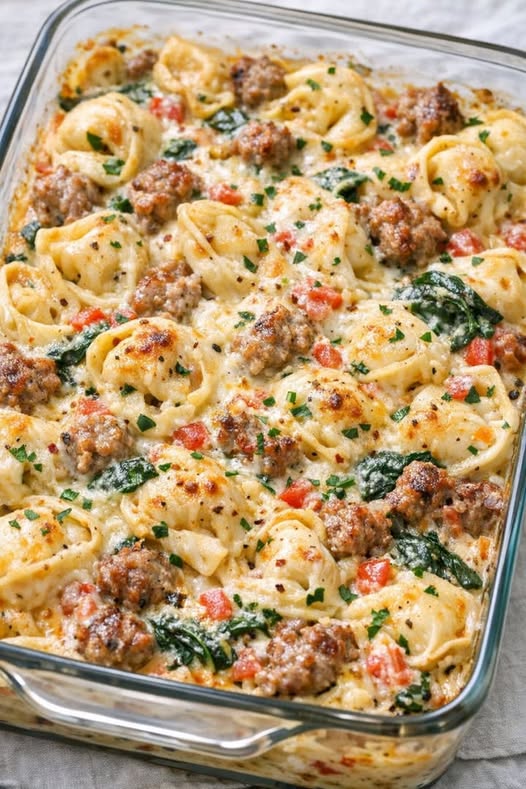
Remove the foil carefully — steam will escape when the foil is lifted, so direct it away from your face. Return the uncovered baking dish to the oven for an additional 5 to 10 minutes until the top of the casserole has developed a lightly browned, slightly crisped surface layer — the Parmesan in the Alfredo sauce begins to caramelize and the top edges of the sauce develop color. This final uncovered phase is what distinguishes a properly finished baked pasta from a merely cooked one: the textural contrast between the browned top layer and the creamy interior below is a significant part of the dish’s appeal.
Step 7 — Rest and Serve
Remove from the oven and allow the casserole to rest for 5 minutes before serving. This brief rest allows the sauce to settle slightly and thicken to a proper serving consistency — immediately after the oven the sauce is very fluid; after five minutes it coats the pasta in the way that makes each spoonful satisfying. Serve directly from the baking dish with a large spoon, making sure each portion includes some of the browned top layer alongside the creamy interior.
Tips for the Best Results
Don’t skip browning the sausage properly. The browned surface of well-cooked Italian sausage contributes significantly to the flavor of the finished sauce through the Maillard reaction — the same chemistry that makes browned meat more flavorful than boiled meat. Sausage that is merely cooked through without any browning produces a noticeably less complex, less satisfying sauce. Take the extra minute to let the sausage develop some golden color against the skillet.
Scrape up the browned bits when adding the sauce. The stuck, caramelized bits of sausage on the bottom of the skillet after browning are the most concentrated, most flavorful element of the cooking process. The Alfredo sauce dissolves them when it hits the hot skillet, incorporating their flavor into the sauce at no additional cost or effort. Leaving them in the pan is leaving the best part of the dish behind.
Cover tightly during the first baking phase. The foil seal during the covered bake creates the steam environment that cooks the refrigerated tortellini through. A loose or poorly sealed foil cover allows steam to escape, potentially producing tortellini that is still firm at the center when the covered phase ends. Press the foil firmly around the edges of the dish before it goes in the oven.
Use good-quality jarred Alfredo. The Alfredo sauce is the primary sauce component and its flavor character permeates the entire dish. A sauce with good cream and Parmesan content produces a noticeably more complex and satisfying result than a thin, starchy economy brand. Rao’s is the widely recognized gold standard among jarred pasta sauces; Primal Kitchen and Bertolli Creamy Alfredo are good alternatives at a lower price point.
Let it rest before serving. Five minutes of resting after the oven allows the casserole’s sauce to settle and thicken from very fluid to properly coating. Serving immediately produces a slightly runny result that pools in the bowl rather than clinging to the pasta. The brief wait makes a clear difference to the serving consistency and the overall eating experience.
Frequently Asked Questions
Can I use frozen tortellini?
Yes, with adjustments. Thaw the frozen tortellini in the refrigerator overnight or at room temperature for 30 minutes before using. Frozen tortellini that goes into the casserole straight from the freezer takes considerably longer to cook through and can produce an uneven result where some pieces are still firm while others are fully cooked. If thawed first, add 5 to 10 minutes to the covered baking time and check for tenderness before removing the foil.
Can I use a different type of sausage?
Yes. Spicy Italian sausage produces a more assertively flavored result with building heat. Sweet Italian sausage — sometimes sold as “Italian sweet sausage” with fennel and anise — produces a sweeter, more fragrant result. Chicken Italian sausage is a leaner alternative that still provides the fennel and herb seasoning. Breakfast sausage can be substituted for a milder, less fennel-forward result. Smoked sausage sliced into coins produces a different texture but the same general character. Any seasoned ground pork or chicken sausage works well; the seasoning blend of the sausage is what flavors the entire dish, so choose one with flavor you enjoy.
Can I add vegetables?
Yes — and it’s one of the best ways to extend the dish. Frozen spinach (thawed and squeezed dry) stirred into the sauce-sausage mixture before transfer to the baking dish adds color and a mild, slightly earthy green note. Frozen peas stirred in at the same stage add bright color and sweetness. Diced roasted red peppers (from a jar) contribute a sweet, smoky pepper flavor. Sautéed mushrooms add an earthy depth that pairs naturally with the Italian sausage and Alfredo. Any of these can be added without changing the method.
Can I add extra cheese on top?
Yes — a generous handful of shredded mozzarella, shredded Italian blend, or grated Parmesan scattered over the top of the casserole during the final 5 minutes of the uncovered bake produces a melted, golden-brown cheese crust that is one of the most appealing presentations available for any baked pasta dish. The cheese browns under the oven’s heat and forms a slightly crisped surface that contrasts with the creamy interior below. This is the most popular and most recommended single upgrade to the base recipe.
How do I store and reheat leftovers?
Store leftovers in an airtight container in the refrigerator for up to 3 days. The sauce thickens during storage as the tortellini absorbs it; when reheating, add a splash of milk, cream, or chicken broth to the portion before reheating to restore the creamy consistency. Reheat in a covered dish in a 350°F oven for 15 to 20 minutes until heated through, or reheat individual portions in the microwave at medium power, covered, for 2 to 3 minutes, stirring once halfway through. The tortellini will be slightly softer in reheated portions but the flavor is well preserved.
Variations Worth Trying
Mozzarella cheese top version: Scatter 1½ cups of shredded mozzarella over the casserole in the final 5 to 8 minutes of the uncovered bake. The mozzarella melts into a golden, slightly bubbled cheese layer that is visually striking and adds a stretchy, rich cheese component that many people consider the best possible finish for any baked pasta.
Spinach and sausage version: Stir one 10-ounce package of frozen chopped spinach (thawed and squeezed as dry as possible in a kitchen towel) into the sausage and Alfredo mixture before adding the tortellini. The spinach adds color, a mild earthy flavor, and enough vegetable presence to make the casserole feel more balanced. This version is particularly good with a sprinkle of Parmesan over the top before the final uncovered bake.
Sun-dried tomato version: Add half a cup of oil-packed sun-dried tomatoes (drained and roughly chopped) to the sausage and sauce mixture before combining with the tortellini. The sun-dried tomatoes add an intense, sweet-tart tomato flavor and a slightly chewy texture that provides good contrast against the soft tortellini and creamy sauce. This version shifts the dish’s character toward something more distinctly Italian in a way that feels like more effort was involved than it was.
Spicy arrabbiata version: Use hot Italian sausage and replace the Alfredo with a jarred spicy arrabbiata or fra diavolo tomato sauce, keeping the same quantity. Add a quarter cup of heavy cream or half-and-half to the tomato sauce to approximate the richness of the Alfredo. The result is a tomato-cream sausage tortellini bake with more acidity and more heat than the white sauce version — excellent for households that prefer bolder, more assertive flavors.
Fennel and mushroom version: Before browning the sausage, sauté one cup of thinly sliced cremini mushrooms and half a teaspoon of additional fennel seeds in a tablespoon of olive oil until the mushrooms are golden, about 5 minutes. Add the sausage and proceed with browning as directed. The sautéed mushrooms add earthy depth and the additional fennel deepens the sausage’s most characteristic flavor — a good version for anyone who particularly likes the fennel character of Italian sausage.
Serving Suggestions
Creamy sausage tortellini bake is a complete, filling main course that needs only something fresh and acidic alongside to balance its richness. A crisp green salad dressed with a sharp vinaigrette — the acidity of the dressing cutting directly through the cream and Parmesan of the sauce — is the ideal accompaniment and can be assembled in the time the casserole is in the oven. Garlic bread or crusty Italian bread alongside is excellent for the sauce that remains in the dish after everyone has been served — the Alfredo-sausage sauce is too good to leave behind, and bread provides the means to collect every last spoonful. Roasted broccoli or steamed green beans add the vegetable element that makes the meal feel complete. For a more casual family-style service, bring the baking dish directly to the table on a trivet and let everyone scoop their own portions — the bubbling casserole arriving at the table on its own pan is one of the most reliably appetizing presentations in home cooking.
Storage
Store leftover creamy sausage tortellini bake in an airtight container in the refrigerator for up to 3 days. The tortellini absorbs the sauce during storage and the leftovers will be thicker and denser than the freshly baked dish — add a splash of milk or cream when reheating to restore the sauce’s creamy consistency. Reheat in a covered baking dish in a 350°F oven for 15 to 20 minutes, or in the microwave at medium power with a damp paper towel over the container to prevent the pasta from drying out. The casserole can be frozen in individual portions for up to 2 months; thaw completely in the refrigerator before reheating, as the sauce may break if the frozen casserole goes directly from freezer to oven.
Three Ingredients, One Proper Baked Pasta
Creamy Sausage Tortellini Bake is the kind of recipe that makes weeknight cooking feel less like a compromise and more like a genuine win. Three carefully chosen ingredients — each doing substantial flavor work that no single-component ingredient could achieve alone — produce a baked pasta with creamy sauce, tender stuffed pasta, and a properly browned top layer that looks and tastes like something from a restaurant’s menu. The method is simple enough to execute on a Thursday evening with no advance preparation. That combination of quality result, minimal effort, and complete satisfaction is exactly what a good weeknight recipe is supposed to deliver.
Enjoy!
Read more by clicking the (NEXT »») button below!