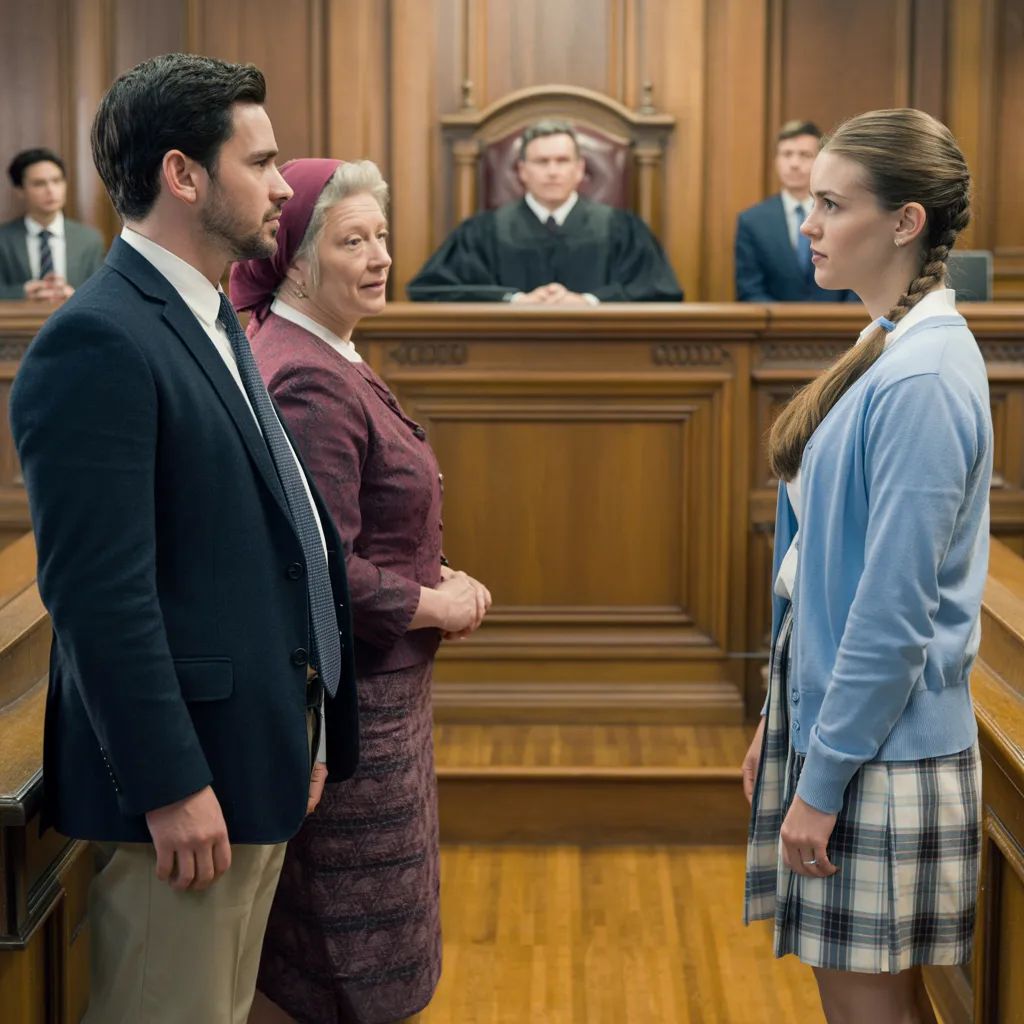
The Courtroom Moment That Changed Everything
The day of the hearing arrived with a quiet tension.
Dmitri and Valentina walked into the courthouse with confidence—the kind that comes from believing you’ve already won. They carried themselves as if the outcome was inevitable.
I sat across from them, holding onto something far more important than confidence: clarity.
When the judge entered the room, everything seemed routine—until it wasn’t.
The moment he looked in my direction, something shifted. He paused, visibly surprised, as if recognizing something unexpected.
And then he spoke.
That recognition wasn’t random. It was tied to a chapter of my life I had long since closed—a past relationship that had ended painfully but quietly. What I didn’t know at the time was that the judge was connected to that chapter in a way I could never have anticipated.
That connection didn’t decide the case—but it changed the atmosphere in the room.
Because now, the judge wasn’t just reviewing documents. He understood context. He understood character. And most importantly, he approached the case with heightened attention.
As the proceedings began, Dmitri’s legal argument quickly started to unravel.
The documents they presented—carefully prepared and confidently submitted—did not withstand scrutiny. Inconsistencies appeared. Claims didn’t align. Signatures raised concerns. What was meant to look like a solid case began to collapse under examination.
The judge addressed each point with precision.
He made it clear that the apartment had been legally inherited. There was no credible evidence of shared ownership, no legitimate financial contributions, and no valid agreements supporting their claim.
The ruling was direct and decisive.
The case was dismissed.
In that moment, everything shifted. What had felt like a looming threat for months was resolved in a matter of minutes—not by luck, but by truth supported with evidence.
Standing Your Ground: Lessons in Strength and Integrity
Walking out of that courtroom, I didn’t feel victorious in the traditional sense. I felt steady.
Because this wasn’t about defeating someone—it was about protecting something that mattered deeply.
In the weeks that followed, the situation resolved itself further. The same documents that were meant to support a claim became evidence of serious legal misconduct. The attempt to manipulate the system ultimately worked against those who initiated it.
But beyond the legal outcome, the experience left me with lasting clarity.
First, ownership is not just legal—it’s personal. When something is built on love, effort, and history, it carries a weight that goes far beyond paperwork.
Second, pressure often disguises itself as practicality. There were moments when signing those papers seemed like the easier option. Walking away can feel tempting when you’re exhausted. But some things are worth the effort, even when the outcome feels uncertain.
Third, preparation matters. Having the right documents, the right support, and the right mindset made all the difference. Truth alone is powerful—but truth supported by evidence is undeniable.
Today, I live in the same apartment.
The bookshelves are still slightly uneven. The hallway still carries the warmth of my mother’s choices. But now, the space holds something more—certainty.
Nothing was taken. Nothing was lost.
And perhaps the most important takeaway is this:
When you stand firm in what is rightfully yours—whether it’s a home, a decision, or your sense of self—you’re not just protecting the past. You’re securing your future.
Because some things are worth fighting for.
And sometimes, standing your ground is the most powerful statement you can make.
Read more by clicking the (NEXT »») button below!