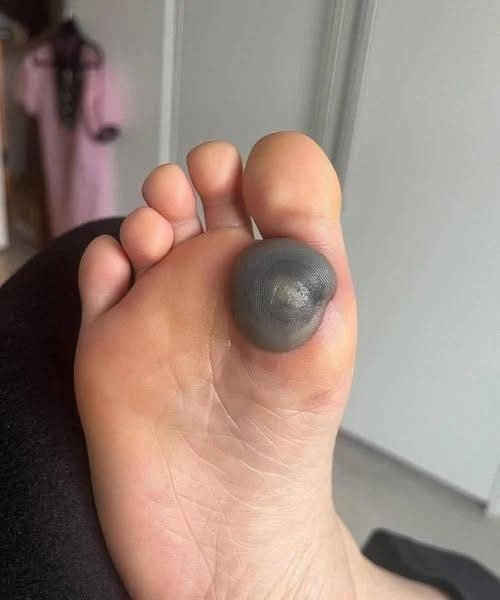
Blood blisters can look alarming when they suddenly appear on the skin. They usually show up as dark red, maroon, or purplish bubbles beneath the surface and may cause mild discomfort or tenderness. Despite their dramatic appearance, most blood blisters are harmless and heal on their own within a short time.
How they form: They develop when tiny blood vessels under the skin break while the top layer of skin remains intact. The leaked blood becomes trapped underneath, creating a raised blister filled with dark fluid.
Common locations: Blood blisters most often appear on the fingers, palms, toes, and soles of the feet—but they can also develop inside the mouth on the cheeks, tongue, or gums.
Common causes:
-
Sudden pressure or repeated friction against the skin
-
Getting a finger caught in a door
-
Tight or poorly fitting shoes rubbing against the feet
-
Tools or sports equipment used without proper protection
-
Activities with repetitive motions that press on the same area
But Here's the Thing: A Blood Blister Alone Shouldn't Cause Inability to Move a Foot
The fact that your daughter can't move her foot is a critical detail. This moves the situation beyond a simple blood blister.
Pain that limits movement could indicate:
1. Infection
If a blister becomes infected, the surrounding area can become red, hot, swollen, and extremely painful. Infection can spread to deeper tissues, making movement difficult.
Signs of infection:
-
Redness spreading beyond the blister
-
Warmth to the touch
-
Pus or yellow/green drainage
-
Fever
-
Increasing pain, not decreasing
2. Cellulitis
This is a bacterial skin infection that can develop rapidly. It causes redness, swelling, warmth, and pain that can make it difficult to use the affected limb.
3. Deep bruising or hematoma
A significant injury could have caused deep tissue damage that's affecting movement.
4. Insect bite or sting
Some insect bites cause dramatic swelling and pain, especially if there's an allergic reaction.
5. Gout or inflammatory condition
Though rare in children, sudden intense pain in a joint can sometimes indicate inflammatory conditions.
6. Something pressing on a nerve
Swelling in the foot could be compressing nerves, affecting movement.
When to Seek Emergency Care
You should seek immediate medical attention if:
⚠️ Your daughter cannot move her foot
⚠️ The pain is severe and not improving
⚠️ There's spreading redness or red streaks
⚠️ The area feels hot to the touch
⚠️ She has a fever
⚠️ She seems confused, lethargic, or unusually ill
⚠️ The spot appeared after a known injury (fall, heavy object, etc.)
Do not wait. Do not "watch and see." Inability to move a limb combined with severe pain is a red flag.
What to Do Right Now
If You're Going to Urgent Care or ER:
-
Do not try to pop or drain the spot
-
Keep the foot elevated to reduce swelling
-
Apply a cold compress wrapped in a cloth (if it's not open/wet)
-
Give age-appropriate pain relief if needed (ibuprofen or acetaminophen)
-
Bring a list of any medications, allergies, and recent activities
If You're Waiting for an Appointment:
If you absolutely cannot get to care immediately and the symptoms are not severe (she can move her foot but it's painful), you can:
-
Elevate the foot
-
Apply ice (15 minutes on, 15 minutes off)
-
Monitor closely for any worsening
-
Keep the area clean and dry
But again: inability to move the foot means you should not wait.
Questions the Doctor Will Ask
Be prepared to answer:
-
When did this first appear?
-
Has she had any injury to that foot recently?
-
Does she have any fever?
-
Has the redness spread?
-
Is she able to wiggle her toes at all?
-
Has she started any new activities or worn new shoes?
-
Any insect bites recently?
-
Any history of similar issues?
The Bottom Line
While a blood blister itself is usually harmless, your daughter's inability to move her foot is a serious symptom that needs evaluation. Don't hesitate—seek medical care.
You're doing exactly the right thing by paying attention and seeking answers. Trust your instincts as a parent. If something feels wrong, it's always better to be safe.
Please update us when you can. I hope it's something easily treatable and that she's on the mend soon.
Read more by clicking the (NEXT »») button below!