Step-by-Step Instructions
Step 1 — Form the Foil Trays
Tear four sheets of heavy-duty aluminum foil, each approximately 12 by 18 inches. Place each sheet on a flat surface and gently press the center down while folding up the edges to create a shallow tray shape — like a shallow rectangular pan — with sides approximately one inch high that will hold the juices as they collect during cooking. The tray does not need to be perfectly formed; the goal is simply to contain the cooking juices rather than allowing them to run out into the slow cooker insert. If using regular (non-heavy-duty) foil, stack two sheets together and fold them simultaneously to create a double-layer tray sturdy enough to hold the food and juices without tearing when lifted.
Step 2 — Season the Beef
Place the ground beef in a bowl and sprinkle the entire contents of the dry onion soup mix evenly over the surface of the meat. Use your hands to gently work the seasoning through the beef, folding and pressing until the onion soup mix is evenly distributed throughout. Mix just until combined — the goal is even seasoning distribution, not a thoroughly worked, compacted mass of meat. Overmixing makes patties dense and tough. Divide the seasoned beef into four roughly equal portions.
Step 3 — Layer the Vegetables
Divide the sliced potatoes equally among the four foil trays, spreading them in an overlapping single layer across the bottom of each tray. Divide the sliced carrots equally over the potato layer in each tray, distributing them as evenly as possible so the carrot is spread across the full surface rather than mounded in the center. Press the vegetable layers down slightly so they lie flat and stable as a base for the beef patty.
Step 4 — Shape and Place the Patties
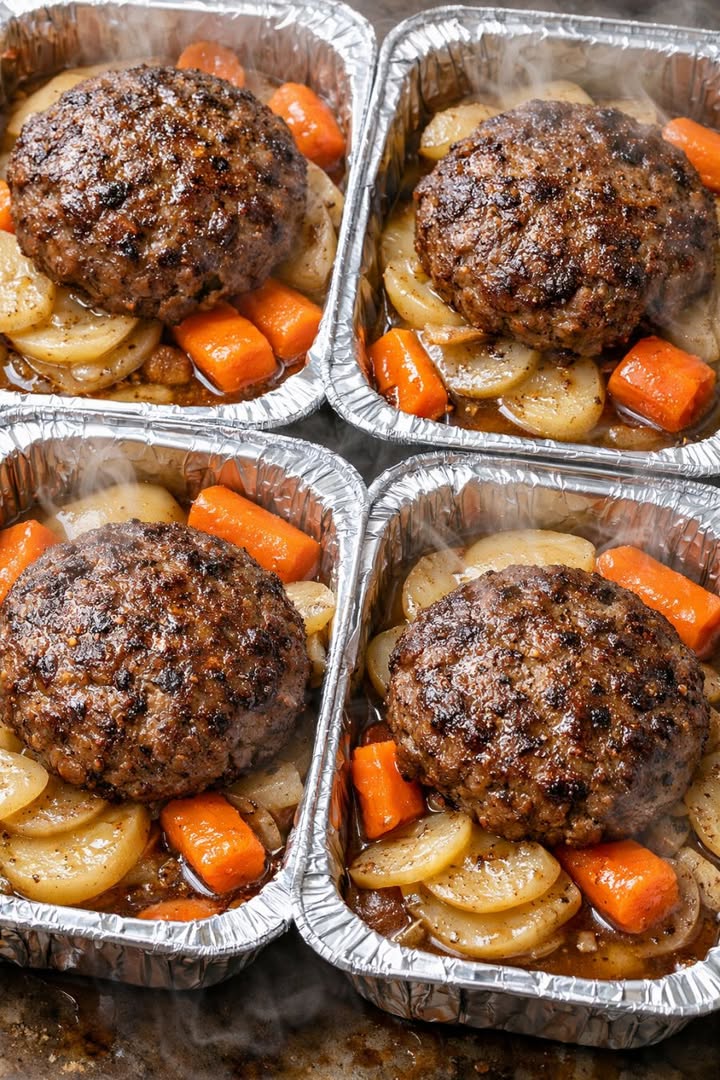
Shape each portion of the seasoned beef into a flat, even patty slightly smaller than the footprint of the vegetable layer in each tray — the patty should sit within the tray edges so the juices released during cooking stay in the tray rather than running off the sides. The patty should be approximately three-quarters of an inch thick — even thickness ensures even cooking throughout. Press each patty firmly onto the vegetable layer so it makes full contact rather than sitting elevated on an uneven surface.
Step 5 — Arrange in the Slow Cooker
Arrange the four foil trays in a single layer across the bottom of a large (6- to 7-quart) slow cooker insert, positioning them as flat and stable as possible. The trays can touch each other and the insert walls; slight overlap at the edges is acceptable as long as the trays remain roughly flat so the juices stay contained. The tops of the trays should be open — do not fold foil over the tops of the patties. The slow cooker’s lid creates the covered cooking environment; the open trays allow the cooking juices to concentrate as the steam released from the slow cooker’s environment circulates above.
Step 6 — Cook
Cover the slow cooker and cook on LOW for 6 to 7 hours or on HIGH for 3½ to 4 hours. LOW is strongly preferred — the extended gentle cook produces completely tender potatoes and carrots, more fully cooked and more richly flavored braising juices, and beef patties that are cooked through without being dry. The dinners are done when the potatoes are completely soft throughout (test with a fork through the foil edge of a tray), the carrots are tender, and the beef patties are cooked through with no pink remaining in the center (an internal temperature of 160°F for ground beef).
Step 7 — Lift and Serve
Carefully lift each foil tray from the slow cooker using tongs or a wide spatula supporting the base, keeping the tray as level as possible to avoid spilling the concentrated juices. Transfer each tray to a plate or shallow bowl. Spoon any cooking juices that have accumulated in the trays back over the beef patties and vegetables before serving. Allow each tray to rest for one to two minutes before eating — the contents are very hot and the steam can cause burns. Serve with the tray on the plate so every diner can access all the juices directly.
Tips for the Best Results
Slice the vegetables thinly and evenly. The potatoes and carrots need to cook through completely in the same timeframe as the beef patties. Thick or uneven slices produce a finished tray where some pieces are properly tender while others are still firm. An eighth to a quarter inch for both is the correct range; err toward thinner rather than thicker for the most reliable result.
Don’t overmix the beef. The onion soup mix needs to be evenly distributed through the meat, but working the beef too aggressively compacts the protein structure and produces dense, tough patties. Mix just until the seasoning is incorporated and no dry pockets of onion soup mix remain, then stop.
Keep the trays open at the top. The open-top tray format is what allows the cooking juices to concentrate during the long cook rather than diluting with accumulated steam. Folding the foil over the top to create a sealed packet traps too much moisture and produces thinner, less flavorful juices. Leave the tops open and rely on the slow cooker’s lid to create the covered cooking environment.
Spoon every last drop of the juices over the food before serving. The concentrated brown cooking liquid that collects in the bottom of each foil tray during the six to seven-hour cook is the most flavorful part of the entire dish — beef fat, onion soup mix seasoning, potato starch, and carrot sweetness all combined. Don’t leave it in the tray; spoon it over the patty and vegetables before the first bite.
Use heavy-duty foil or double-layer regular foil. Single-layer regular aluminum foil is too thin to hold the weight of the food and juices without tearing when lifted. A tear during lifting sends the cooking juices into the slow cooker insert rather than staying in the serving tray where they belong. Heavy-duty foil or two sheets of regular foil stacked together provides the structural strength needed for safe lifting.
Frequently Asked Questions
Can I add other vegetables?
Yes — and the hobo dinner format is particularly well suited to vegetable additions because everything cooks together in the same tray and all the vegetables benefit from the beef and onion soup juices. Sliced onion is the most natural and traditional addition, layered between the potatoes and the beef patty. Thinly sliced bell pepper adds sweetness and color. Sliced mushrooms add earthy depth. Green beans cut into one-inch pieces can be added to the potato and carrot layer. All of these cook through reliably over the six to seven-hour LOW cook.
Can I use ground turkey or chicken instead of beef?
Yes. Ground turkey or chicken produces a leaner, lighter result with a more neutral flavor that relies more heavily on the onion soup mix for its character. Because poultry has less fat than beef, the cooking juices will be thinner and less rich — consider adding a small pat of butter to each tray before cooking to compensate. Ground turkey specifically needs to reach an internal temperature of 165°F to be safely cooked through.
Can I make these ahead?
Yes — assemble the trays completely (vegetables layered, patties placed on top), cover each tray loosely with a piece of foil, and refrigerate for up to eight hours before cooking. Remove from the refrigerator while the slow cooker preheats and add 20 to 30 minutes to the total cook time to account for the cold start. This make-ahead approach is particularly useful for mornings when prep time is limited.
What do I do with leftovers?
Leftover hobo dinner components — the beef, potatoes, carrots, and juices together — make an excellent hash the next morning. Dice the cold beef and vegetables into rough half-inch pieces, heat a skillet over medium-high heat with a tablespoon of butter, and cook the hash, pressing it flat and leaving it undisturbed for several minutes until the bottom develops a crisp, brown crust before flipping. Top with a fried or poached egg. The onion soup mix seasoning in the beef translates particularly well to a pan-fried hash context.
Can I cook these in the oven instead of a slow cooker?
Yes. To cook in the oven, use the fully sealed packet format rather than open trays: place the seasoned vegetables and beef patty in the center of the foil sheet, fold the sides up and over to create a tightly sealed packet, and place the packets on a baking sheet. Bake at 375°F for 45 to 55 minutes until the potatoes are tender and the beef is cooked through. The oven version produces a slightly different result — the vegetables have more steam-cooked texture and the juices are more abundant and less concentrated than the slow cooker version — but the same satisfying combination of flavors.
Variations Worth Trying
Onion and mushroom version: Add a layer of thinly sliced yellow onion between the carrots and the beef patty, and scatter a handful of sliced cremini mushrooms over the top of the patty before placing the trays in the slow cooker. The onion caramelizes partially over the long cook, adding sweet-savory depth to the juices; the mushrooms add earthiness and become deeply flavored from the beef and onion soup liquid surrounding them.
BBQ version: Mix two tablespoons of your favorite barbecue sauce into the ground beef along with the onion soup mix before shaping. The BBQ sauce adds a smoky-sweet element to the patties and enriches the cooking juices with its tomato and molasses base. This version is particularly popular with children and anyone who likes the combination of beef and barbecue flavors.
Italian version: Replace the dry onion soup mix with one tablespoon of Italian seasoning blend and half a teaspoon of garlic powder mixed into the beef. Add a tablespoon of jarred marinara to each tray before placing the beef patty. The Italian herbs and marinara produce a completely different flavor profile — savory, herbal, tomato-forward rather than the classic onion soup character — while the same method applies identically.
Smashed potato version: Use Yukon Gold potatoes instead of russets and add a tablespoon of butter per tray distributed over the potato layer before adding the carrots and beef patty. The Yukon Golds cook into a creamier, more yielding texture than russets and the added butter enriches the cooking juices in a way that makes the potato layer taste more deliberately composed. After cooking, use the back of a spoon to partially smash the potato layer in each tray before spooning the juices over — the smashed potato surface absorbs the cooking juices more thoroughly.
Ranch version: Replace the dry onion soup mix with a 1-ounce packet of dry ranch seasoning mix. The ranch seasoning — dill, garlic, onion, and buttermilk powder — produces a completely different flavor profile with a cool, herbal, slightly tangy character that is distinctive and very popular, particularly for children who may be familiar with ranch as a flavor from other contexts.
Serving Suggestions
Hobo dinners are most naturally served in their foil trays, placed directly on a plate or in a shallow bowl — the tray contains all the cooking juices and serves as the dish from which the meal is eaten. A basket of warm dinner rolls or crusty bread alongside is excellent for soaking up the concentrated cooking juices after the beef and vegetables are gone — the juices are too good to leave in the tray. A simple green salad with a light vinaigrette provides the fresh contrast that balances the richness of the beef and the savory onion soup seasoning. For children, the individual format of the hobo dinner — their own complete meal in their own little tray — is appealing in a way that a shared casserole is not. For adults, the concentrated cooking juices spooned over the patty at the table are the element that makes the dish worth repeating regularly.
Storage
Remove the cooked contents from the foil trays and store in an airtight container in the refrigerator for up to 3 days. Keep the cooking juices with the food — the juices continue to season the beef and vegetables during storage and make the reheated leftovers more flavorful than the freshly cooked dish. Reheat in a covered skillet over medium-low heat with the accumulated juices, or in the microwave at medium power, covered, until heated through. The leftover combination of seasoned beef, potato, and carrot is particularly good as a pan-fried hash the next morning, as described in the FAQ section above.
Four Ingredients, Four Complete Dinners
Slow Cooker Hobo Dinners demonstrate the enduring wisdom of practical, economical cooking: that the right combination of simple ingredients, the right cooking method, and the right amount of time produce something more satisfying than its ingredient count suggests. The onion soup mix seasons the beef and the cooking juices simultaneously; the potatoes and carrots absorb those juices and become soft, sweet, and deeply flavored from the inside; the beef patties cook through gently, remaining moist and well-seasoned throughout. Four ingredients, one slow cooker, and six hours of unattended time produce four complete individual dinners, each arriving at the table in its own vessel with its own concentrated, deeply flavored cooking liquid. That is practical cooking at its most satisfying.
Enjoy!
Read more by clicking the (NEXT »») button below!