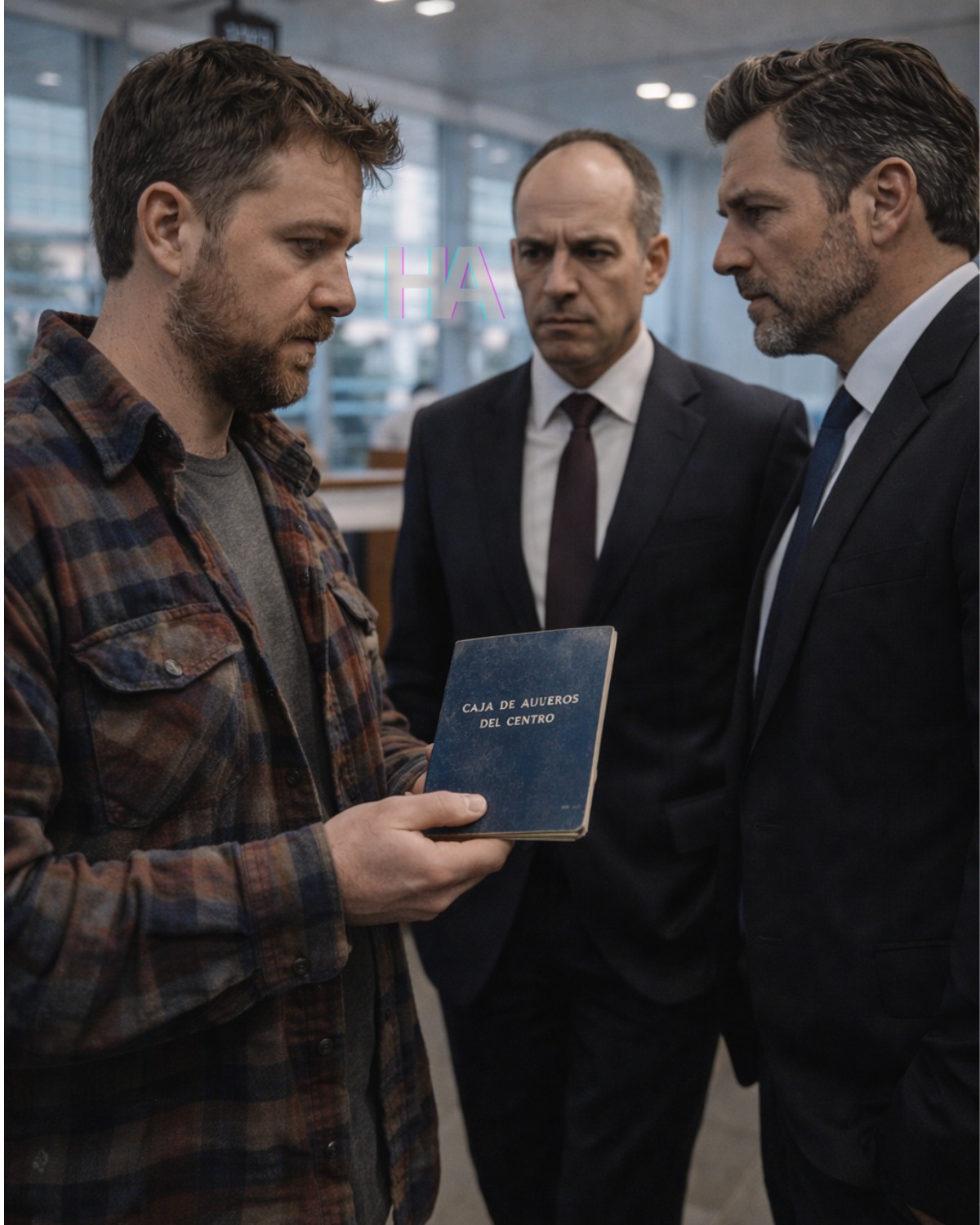
It was a little after nine on a pale spring morning in downtown Dallas when you walked into the bank wearing work boots, a faded flannel, and the same expression you wear when you’re about to open a wall and find out whether the wiring behind it is ordinary or about to ruin your day. The towers around Ross Avenue were still waking up in sheets of cold glass, traffic was beginning to thicken, and people in pressed shirts were moving with the fast, polished confidence of people whose hands never come home smelling like copper, dust, and insulation. In your left hand, you held an old blue passbook so worn at the edges it looked less like money and more like something rescued from a flood.
Five years earlier, on your wedding night, half your family had laughed when your grandfather pressed that passbook into your hands.
He had done it near the end of the reception, when the band had shifted into slow songs and the backyard lights over the venue glowed soft and tired, the way happiness looks after midnight when it has given up trying to impress anyone. Your grandfather, Mateo Mendoza, wore a dark navy suit none of you had ever seen before. Later, your wife said it looked like the kind of suit a man buys for one important day and protects from everything else.
He had held the passbook between both hands for a moment before giving it to you, and that pause was what stuck with you more than the object itself.
“For your future,” he said quietly. “Keep it safe. Not for now. For later.”
You opened it because that is what anybody would do when handed a relic at a wedding reception. The cover read Central Valley Savings & Loan, the print almost gone. Inside, the entries were handwritten in careful blue ink, starting in the early nineteen-seventies, each deposit logged in the steady, patient script of someone who believed small things mattered if you let them continue long enough.
Before you could ask a single question, your father stepped in.
He took the passbook out of your hands, flipped it open, laughed once, and said, “Dad, that bank went under in the eighties.” Your mother leaned over his shoulder with a champagne glass still in her hand and gave the kind of light, embarrassed smile people use when they want to make disrespect feel like practicality. Your older brother Julian smirked and asked if there was enough in there for half a sandwich. Your sister barely looked at it before glancing away.
Your grandfather never argued.
He just looked at you and said, “You keep it, Sam. When the time comes, you’ll know.”
There was no offense in his voice, no wounded pride, no trembling old-man insistence that everyone take him seriously. That was part of what made the moment land harder than if he had fought back. He sounded like a man describing weather he had already seen coming over the ridge.
You slipped the passbook into the inside pocket of your jacket and let the room move on.
You wish you could say you went to the bank the next week. You didn’t. Life stepped in, filled the doorway, and kept filling it.
Work started early and ended late. Your wife got pregnant. Your son was born. Bills piled up, thinned out, then piled up again the way they always do when you’re building a family one honest paycheck at a time. Somewhere inside all that motion, the passbook went into the top drawer of your nightstand under spare keys, old receipts, and the silver watch you only wore to weddings and funerals.
But you kept seeing your grandfather.
Every Sunday, if you could make it. Lemonade on the back porch in summer. Coffee at his kitchen table when the north wind came in hard and sharp. Long talks about work, family, weather, tools, and the thousand ordinary decisions that make up a man’s life when nobody is applauding it.
He was the only person in your family who asked about your electrical work like it mattered as much as any office title.
“You make things run,” he told you once. “Don’t let anybody make that sound small.”
Your grandfather and grandmother had lived in the same little house in Oak Cliff longer than most marriages last now. He never acted rich. He never dressed rich. He never spoke like a man with anything to prove, and that was part of what made the passbook feel unreal. The numbers in it seemed to belong to some other version of him, not the one who drove an old truck, sharpened his own lawn blades, and still folded grocery bags to reuse as trash liners.
Then he died in February.
Peacefully, the hospice nurse said. Quietly, your mother said. Suddenly, even though he was eighty-six and had been moving like a man whose body was learning how to say goodbye for months.
The funeral was small. The house smelled like lemon cleaner, old wood, and the strange clean silence death leaves behind after the casseroles stop coming.
Your father checked his watch during the service. Your mother left early because she had “another thing.” Julian spent more time on his phone than looking at the casket. You gave the eulogy because someone had to stand up and say plainly that Mateo Mendoza had lived a life worth honoring even if he had never once built it to be admired.
Two days later, the lawyer read the will.
Your father got the house. Julian and your sister split a modest savings account. You got your grandfather’s old work van and his tool chest, both of which he had more or less already placed in your hands years earlier by letting you help him fix everything from fence gates to kitchen outlets. When it was over, Julian leaned back in his chair, smiled the polished smile he wore whenever he wanted to sound cleverer than everyone else, and said, “Don’t forget your vintage bank book.”
That was the line that brought the passbook back.
The next morning, before changing for a job, you took it out of the nightstand drawer and sat on the edge of the bed with it in both hands. Your wife, Hannah, woke, saw your face, and understood immediately that something had settled in you during the night.
“You’re going today?” she asked.
“If I put it off again, I won’t go.”
She offered to come with you. You said no, not because you didn’t want her there, but because whatever the passbook contained, whether it was money or memory or nothing at all, you needed to find out as the grandson he had trusted, not as a husband hiding behind company.
So now you are standing in the marble lobby of First Dominion Bank, successor by merger and acquisition and rebranding to institutions your grandfather’s passbook had outlived by decades.
The young teller at the counter barely glances at you at first. Then you slide the blue passbook under the glass, and her expression changes in the small confused way people’s expressions do when they are handed something old enough to disrupt their training. She flips it open, frowns, says, “One moment,” and disappears to the back.
You wait.
At first it feels faintly embarrassing, as if you have brought a dead flashlight into an electronics store and asked if someone can still charge it. Then a man in a gray suit comes out from behind the offices. He’s maybe in his fifties, silver at the temples, careful in the way serious bankers are careful when they have learned that composure is half their product. He takes one look at the passbook, then at your name on the driver’s license the teller has placed beside it, and something in his face goes formal.
“Mr. Mendoza?” he asks.
You nod.
“I’m Daniel Mercer, branch manager. Would you come with me, please?”
It is the kind of question that isn’t really a question. Before you answer, another man steps out from a side office, younger, sharper suit, executive posture. Daniel introduces him as Andrew Cole, regional vice president. Nobody at a bank ever becomes that much more formal over a dead account holding twenty-eight dollars and a story.
That is the first moment you understand your grandfather may have known exactly what he was doing.
They lead you upstairs to a glass office overlooking the lobby. Daniel closes the door. Andrew sits across from you and places the passbook on the desk with both hands, almost respectfully.
“Mr. Mendoza,” he says, “this account was never closed.”
Read more by clicking the (NEXT »») button below!