You don’t say anything because the sentence is bigger than your thoughts for a second.
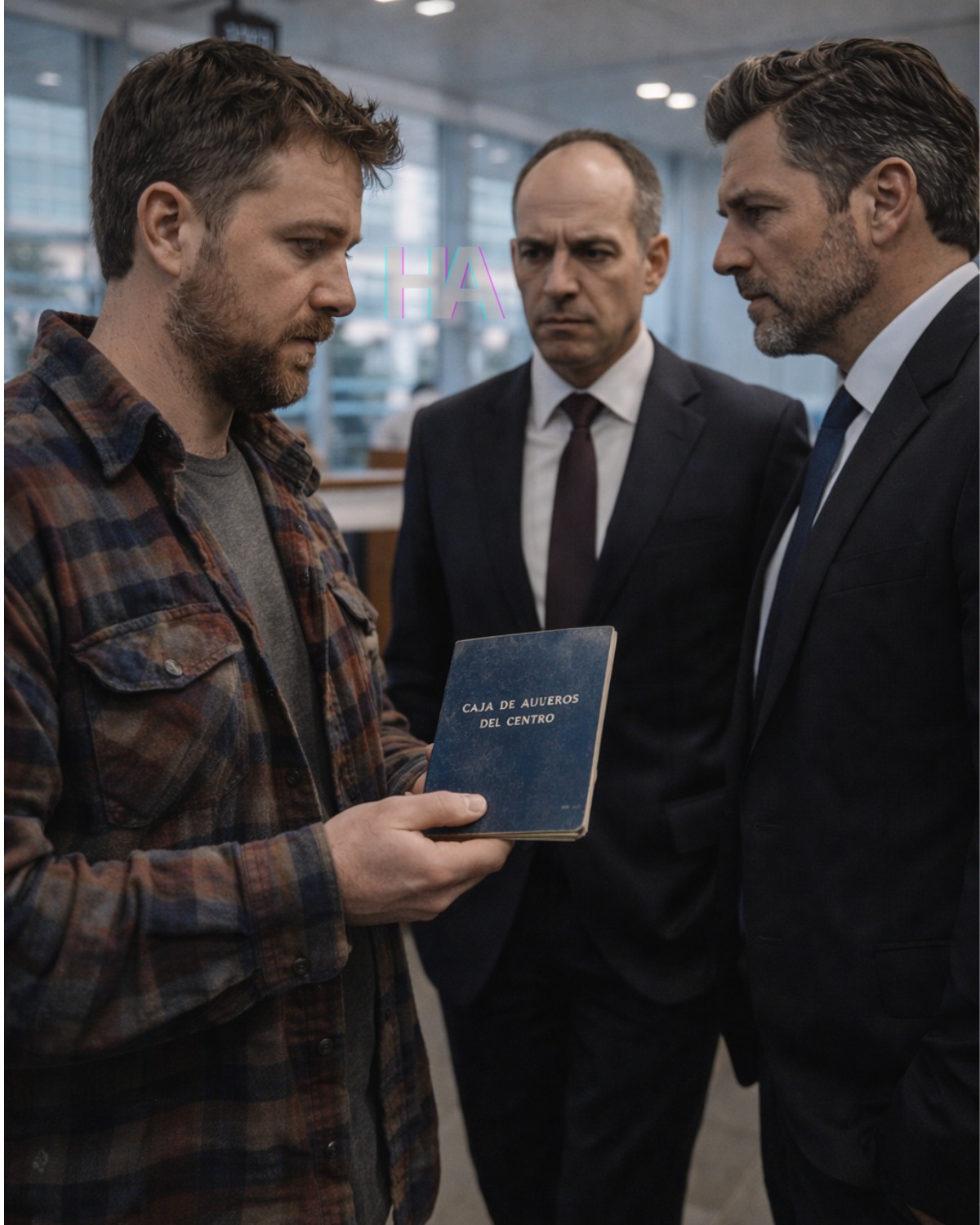
Daniel opens a slim binder and turns it so you can see the notes. “Central Valley Savings & Loan failed as an institution in 1987,” he says. “But certain legacy accounts were transferred through a series of mergers. Your grandfather’s was one of them. It was a mutual depositor account first, then a conversion account, then a managed legacy holding with reinvested dividends.”
You stare at him.
“I’m an electrician,” you say finally. “You may need to say that like I’m not sitting in a suit.”
To Daniel’s credit, he almost smiles.
“Your grandfather opened this account in 1973,” he says. “He kept funding it steadily. When the bank converted, qualifying account holders received stock allocations. Your grandfather never sold. When the next merger happened, he kept the shares. He reinvested the dividends. He added to the account several more times over the years through certificates and rolling deposits. He also left written instructions that if the original passbook was ever presented in person by one Samuel Mendoza after his marriage, we were to contact regional administration immediately and bring him in private.”
The room goes very still.
Andrew slides a paper toward you. It contains a number. You read it once, then again because your brain rejects it as formatting before it accepts it as math.
Two million, three hundred eighty-one thousand, four hundred twelve dollars and sixty-seven cents.
You look up and the glass office, the carpet, the skyline beyond the window, all of it seems to tilt a little.
“There has to be a mistake.”
“There isn’t,” Andrew says gently.
Daniel turns another page. “There’s more. Your grandfather kept a sealed letter on file for the beneficiary. He updated it annually. There is also a private deposit box tied to the same legacy instruction.”
You have wired houses that cost more than the homes your family has ever lived in. You have stood in crawlspaces at six in the morning wondering how the hell you were going to cover braces for your son and tires for the van in the same month. You have learned to measure life in materials, hours, service calls, and what can be delayed without becoming dangerous. Now two men in expensive ties are speaking to you like a man carrying a cracked blue passbook just walked in and opened a second gravity.
Daniel places an envelope on the desk.
Your grandfather’s handwriting is on the front. Not printed. Written. To Sam.
Your hands are steady right up until they touch it.
Inside is a letter folded three times. You open it slowly because suddenly speed feels like disrespect.
Sam,
If you are reading this, then either I am gone or you finally decided later had arrived. Good. That means you waited long enough to know the price of groceries, rent, hard work, and tired bones. Money given too early often becomes noise. Money found after responsibility becomes a tool.
You stop there, inhale once, then keep going.
Your father laughed at this book because he only trusts what looks current. Your brother laughed because he thinks value has to announce itself. Your mother laughed because she mistakes ease for wisdom. I did not give this to them because they do not know how to hold quiet things without belittling them first.
I gave it to you because you listen.
The words hit harder than the balance had.
Your grandfather goes on to explain that he began the account when he was twenty-nine, the year your father was born. He had watched his own father die broke after a life of work and decided no one in his line would ever say honest labor could not grow into safety if a man was patient enough. He put in small amounts at first. Then larger ones when he could. He never touched it, even when things were tight, because some money, he wrote, should not be for solving this month. Some money should be for changing a family’s ceiling.
Then comes the line that splits you open.
I told you not for now, for later, because I did not want this to save you from becoming the man you were meant to be. I wanted it to meet you after you already were him.
You lower the paper and stare out through the office glass because you suddenly cannot look at anything close.
Andrew lets the silence sit. Daniel, wiser, pretends to review paperwork.
When you finish the letter, there is one last paragraph.
Do not waste this trying to earn respect from people who already had the chance to give it freely. Build your own table. Feed your wife and child at it. Give work to good people. Sleep clean. If the others ever come asking, I left one more envelope for that too.
Daniel, without a word, sets a second sealed envelope on the desk.
This one is labeled Only if they come because of money.
You almost laugh. Not because anything is funny, but because it is the most Mateo Mendoza thing in the world to plan two moves ahead of everyone and still never brag about it.
The deposit box is in the vault level downstairs.
Daniel escorts you personally, because of course he does. At this point the cracked blue passbook has become less an object than a key to a life your grandfather built invisibly inside the one everybody thought they understood. The box is narrow but deep. Inside are stock certificates, old transfer letters, tax forms, a yellowed photograph of your grandfather in work clothes standing beside a much younger bank founder, and a ringed leather notebook full of dates, balances, and observations written over forty years.
There is also a smaller envelope tucked beneath the others.
Inside that one is a note from 1998.
Met with Mr. Collins again. He says selling now would be wise. I said wise for whom. I know what I am building. Not for me. For whoever still understands the difference between having money and serving it.
You sit on the little stool in the vault room with the note in your hand and feel the kind of grief that only arrives when love reveals how long it had been planning for you without telling you. Your grandfather had not stumbled into this. He had constructed it patiently, deliberately, quietly, year after year while living in the same little house, driving the same truck, fixing his own gutters, and letting a family of louder people misread him because correcting them apparently never interested him much.
By the time you leave the bank, the blue passbook is back in your hand, but everything about it has changed.
Daniel and Andrew have gone over the next steps. The legacy holdings can be rolled into a modern trust and brokerage structure. Taxes will matter. So will timing. There are signatures to make, advisors to meet, and paperwork to do, but none of that touches the deepest part of what just happened.
The first place that didn’t laugh at your grandfather’s passbook was the bank.
The second is your wife.
Hannah is at the kitchen table when you get home, laptop open, hair up, your son’s superhero lunchbox drying beside the sink. She sees your face and closes the laptop before you say a word. When you place the passbook, the letter, and the summary paper in front of her, she reads them in silence.
Then she starts crying.
Not loud. Not dramatic. Just the kind of crying people do when relief and love hit the same place in them at once and neither one is willing to wait for the other. You sit beside her and let her hold the paper with both hands while you tell her about Daniel Mercer, the glass office, the safe-deposit box, the second envelope, and the number that still sounds made up when you say it aloud.
She laughs through tears at that.
“So your grandfather,” she says, wiping at her face, “basically walked into your wedding and handed you a future nobody else had the imagination to recognize.”
That is exactly what he did.
For the first time in years, the future changes shape in one day. Not in the fairy-tale way people who have never been broke imagine money works. More in the structural way. You can suddenly see air in places where there had only ever been pressure.
You and Hannah don’t go out celebrating. You don’t buy anything impulsive. You order takeout because neither of you can cook with hands that distracted. After your son is asleep, you spread the papers across the kitchen table and start reading your grandfather’s notebook.
That is where the real education begins.
He wrote about markets the way farmers write about weather. Calmly. Attentively. With respect for the fact that panic is usually expensive. He noted every merger. Every stock conversion. Every dividend reinvestment. Every year he thought about telling the family and decided not to because, in his words, “noise ruins patience.”
He also wrote about you.
Sam fixed my kitchen outlet without making me feel foolish for asking.
Sam changed jobs but kept his dignity.
Sam married well.
Sam looks tired. Good. Men who are never tired are usually letting someone else carry their life.
You sit there at midnight with the notebook open and feel your throat tighten.
Your grandfather had seen you clearly all along. Not as the son who didn’t go to college, not as the brother without a corner office, not as the family electrician whose work boots made him look underdressed in group photos. He saw the steadiness. He saw the hours. He saw the parts of you nobody else considered valuable because they did not sparkle under restaurant lighting.
For two weeks, you say nothing to your family.
Not because you’re afraid. Because your grandfather’s letter told you not to waste this trying to earn respect. You meet with Daniel. You meet with a tax attorney. You move part of the holdings into a trust structure. You pay off the credit cards first, then the truck loan, then the lingering medical balance from when your son broke his arm last fall. You don’t tell anyone because private relief still feels more sacred than public revenge.
Then Hannah says the sentence that changes the direction of everything.
Read more by clicking the (NEXT »») button below!